
Fever in Children: When to Worry and When to Watch
Most fevers in children are a normal sign that the body is fighting an infection, and the number on the thermometer matters less than how your child looks and acts. You should worry and call right away if your baby is under 3 months old with a temperature of 100.4°F or higher, or if your child of any age has trouble breathing, is very hard to wake, or seems seriously ill.
At Pediatric Care Corner in West Bloomfield, Michigan, fever is one of the most common reasons parents call us. This guide explains what a fever really is, how to keep your child comfortable at home, and the signs that mean it's time to call us or go to the emergency room.
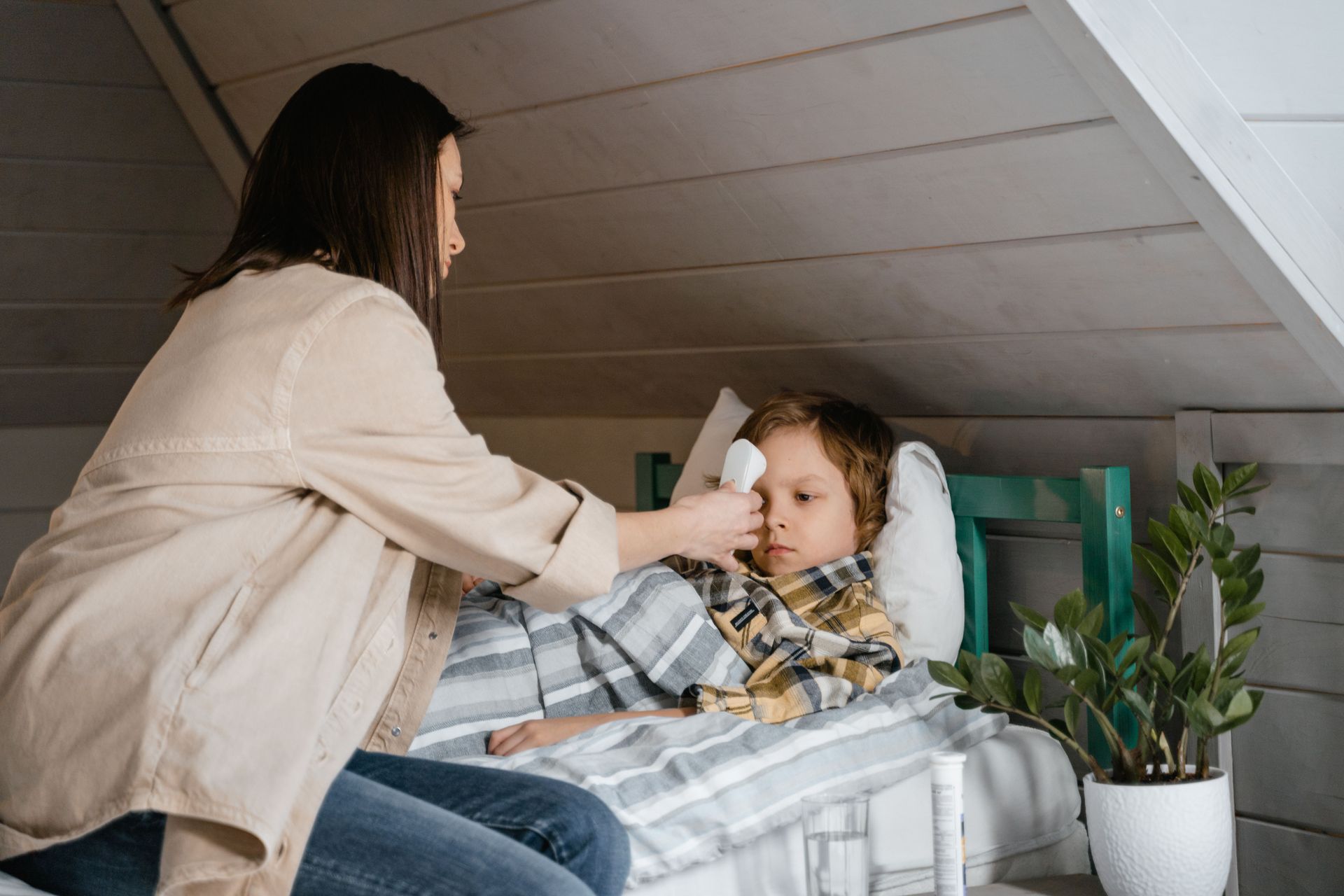
What temperature counts as a fever in a child?
In general, a fever is a temperature of 100.4°F (38°C) or higher. How you take the temperature matters:
- Rectal readings are the most accurate for babies and young toddlers.
- Oral readings work well for older kids who can hold a thermometer under the tongue.
- Forehead and ear thermometers are convenient but can be less precise, especially in infants.
If you get a borderline reading, recheck it. When you call us, let us know the number, how you took it, and how long the fever has lasted.
Is a fever actually bad for my child?
In most cases, no. A fever isn't an illness on its own. It's one of the body's tools for fighting infection. Raising the body's temperature helps the immune system work more efficiently and makes it harder for many germs to multiply.
That's why treating the number isn't always necessary. A child with a 102°F fever who is still drinking, playing between naps, and making eye contact is often doing better than the number suggests. On the other hand, a child with a lower fever who is listless and won't drink deserves a closer look.
The bottom line: Watch your child, not just the thermometer.
How can I keep my child comfortable with a fever?
The goal of fever care is comfort, not bringing the temperature back to normal. These simple steps can help:
- Offer plenty of fluids. Water, breast milk, formula, diluted juice, or ice pops all count. Staying hydrated is one of the most important things you can do.
- Dress them lightly. Use one light layer of clothing and a light blanket. Bundling can trap heat.
- Let them rest. Quiet play, books, and naps are all fine. There's no need to keep a feverish child in bed if they feel up to moving around.
- Keep the room comfortable. Aim for a room that's not too warm.
- Skip cold baths and rubbing alcohol. Cold water can cause shivering, which actually raises body temperature, and rubbing alcohol can be harmful.
- Let a sleeping child sleep. You don't need to wake your child just to give fever medicine.
Should I give my child fever medicine, and how much?
Fever reducers such as acetaminophen or ibuprofen can help a child who is uncomfortable feel better, eat, drink, and sleep. They're not required for every fever.
A few important safety points:
- Dosing is based on weight, not just age. Please ask us for the right dose for your child. Our team can help you figure out the correct amount and the right product, since children's medicines come in different strengths.
- Use the dosing device that comes with the medicine. Kitchen spoons are not accurate.
- Ibuprofen is not for babies under 6 months unless your doctor directs you to use it.
- Never give aspirin to children or teens, as it has been linked to a rare but serious condition called Reye's syndrome.
- Call us before giving any medicine to a baby under 3 months old with a fever. They need to be evaluated first.
If you're unsure about a dose, call our office at (248) 926-1411. Our site also has a Medicine Dosages resource, and we're always glad to double-check with you.
When should I call the pediatrician about a fever?
Call Pediatric Care Corner right away if:
- Your baby is under 3 months old with a temperature of 100.4°F or higher. This is always urgent, even if your baby seems fine otherwise.
- Your child is under 1 year old with a fever of 100.4°F or higher.
- Your child is over 1 year old with a fever of 102°F or higher along with other symptoms.
- The fever has lasted more than three days.
- The fever comes with a rash, stiff neck, vomiting, or headache.
- Your child has persistent pain, a widespread rash, or unusual symptoms lasting more than three days.
- Your child has signs of an ear infection, sore throat, or painful urination along with the fever.
- Your instincts tell you something isn't right.
We offer same-day sick visits whenever the office is open. Call early in the day so we can find a time that works. Evening visits are also available by appointment.
What if it's after hours?
If you need to reach a doctor when the office is closed, call our answering service at (248) 584-6185. We aim to return each call within 30 minutes; if you don't hear back, please call again. Please save non-urgent questions and prescription refills for regular office hours.
When should I take my child to the ER for a fever?
Call 911 or go to the nearest emergency room if your child with a fever:
- Is struggling to breathe, breathing very fast, or has blue or gray lips or skin
- Is very difficult to wake, limp, or unresponsive
- Has a seizure
- Has a stiff neck along with confusion or extreme sleepiness
- Has a purple or dark red rash that doesn't fade when you press on it
- Shows signs of severe dehydration, such as no urine for 8 hours or more, no tears when crying, or a very dry mouth
- Cannot be comforted or seems to be getting worse quickly
When in doubt about whether it's an emergency, don't wait. Call 911.
Frequently asked questions
Can teething cause a high fever?
Teething may cause a slight rise in temperature, but it doesn't typically cause a true fever of 100.4°F or higher. If your teething baby has a fever, look for another cause or give us a call.
How high is too high for a fever?
There's no single number that tells the whole story. Age and behavior matter more. Any fever in a baby under 3 months needs a call right away, and in older children, a fever of 102°F or higher with other symptoms is a reason to call.
Should I alternate acetaminophen and ibuprofen?
Please ask us before alternating medicines. It can make dosing mistakes more likely, and it often isn't needed.
When can my child go back to school or daycare?
In general, your child should be fever-free for 24 hours without fever medicine before returning. Check your school's or daycare's policy too.
Key takeaways
A fever of 100.4°F or higher is the body's natural way of fighting infection, and most fevers can be managed at home with fluids, rest, and comfort care. Fever medicine dosing should be based on your child's weight, so ask us for the correct amount. Any fever in a baby under 3 months old needs a call right away, and signs like trouble breathing, a seizure, or a child who is hard to wake mean it's time for the ER.
We're here when your child isn't feeling well
If your child has a fever and you're not sure what to do, the team at Pediatric Care Corner in West Bloomfield is ready to help. Call us at (248) 926-1411 to book a same-day sick visit. Office hours are Monday through Thursday 8:00 a.m. to 6:00 p.m., Friday 8:00 a.m. to 5:00 p.m., and Saturday 8:30 a.m. to 12:00 noon. After hours, reach the on-call doctor at (248) 584-6185.
This article is for general education and does not replace advice from your child's pediatrician. Please contact our office with questions about your child's health.
